
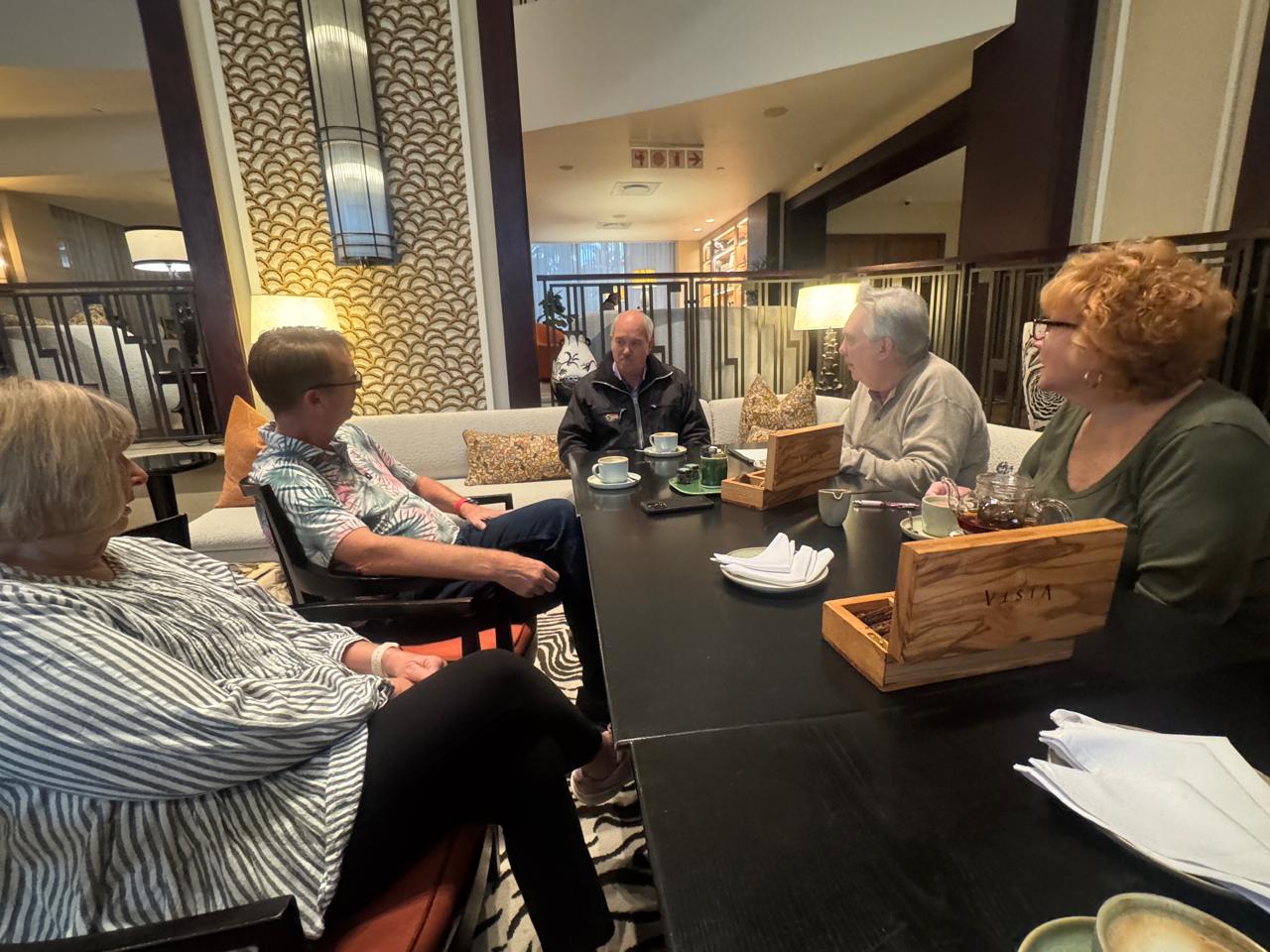
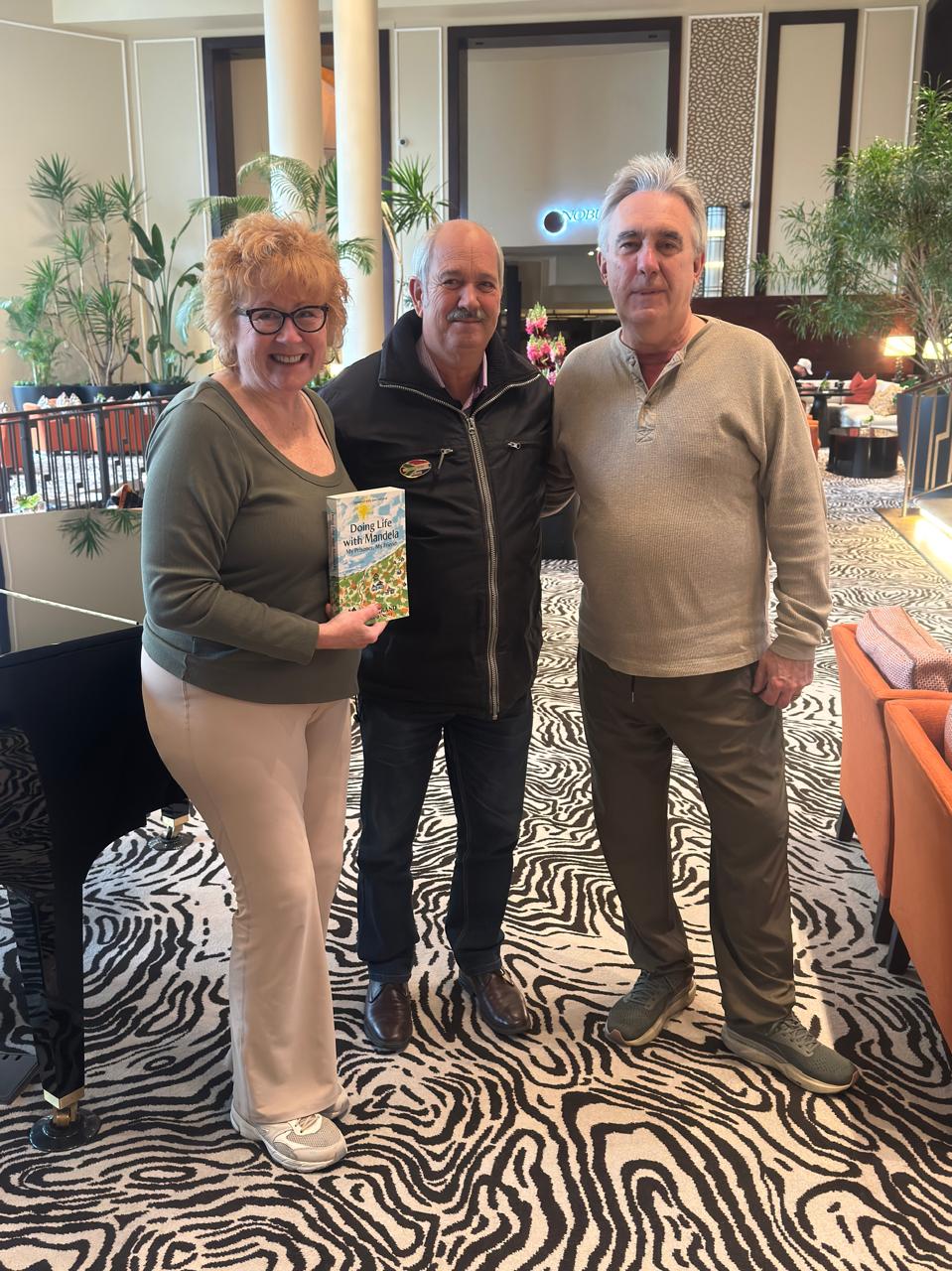
I remember the day in 1990 when Nelson Mandela was released. I was in Jamaica and witnessed the celebrations. Our Micato guide Steve Lake’s mom took her teenage son to Mandela’s first speech that day in Cape Town. Talk about a defining moment in a young life. While we were in Cape Town Steve had a surprise for us. He’s a personal friend of Christo Brand and arranged for us to have coffee with him one morning.
Christo Brand is a name often associated with the remarkable story of friendship and reconciliation during one of the most tumultuous periods in South African history. Known for his unique relationship with Nelson Mandela, Brand’s life reflects themes of humanity, understanding, and the power of connection across divides.
Christo was born into a modest Afrikaner family in South Africa. Growing up in a country deeply divided by apartheid, his early years were shaped by the social and political norms of the era. As a young man, Brand joined the prison service in lieu of a mandatory military service, a move that would inadvertently lead him into a life-changing relationship with one of the century’s most iconic figures.
In 1978, at the age of 19, Christo Brand began work as a prison warden at Robben Island, the infamous prison where Nelson Mandela and many other anti-apartheid activists were incarcerated. Despite the rigidly hierarchical and racially oppressive environment, Brand’s interactions with Mandela were marked by respect and an openness that transcended the barriers set by apartheid policies.
Mandela was serving a life sentence at the time for his role in opposing apartheid and leading the African National Congress (ANC). Brand, initially adhering strictly to the rules of his position, found himself increasingly drawn to Mandela’s wisdom, dignity, and unwavering commitment to justice. Over time, their relationship grew from formal exchanges to moments of genuine connection.
Christo Brand’s humanity and willingness to listen played a significant role in building trust between himself and Mandela. He often went beyond the call of duty, assisting Mandela in small but meaningful ways, such as smuggling letters to keep Mandela connected with his family. These acts of kindness, though subtle, became symbols of resistance against the inhumanity of apartheid.
Their friendship deepened during Mandela’s transfer to Pollsmoor Prison in 1982, where Brand continued to serve as one of the wardens. Mandela, even in the harshest conditions, retained his optimism and displayed immense patience in dealing with his captors—a trait that further influenced Brand. Through their interactions, Brand began to question the apartheid system he had been born into and conditioned to accept.
When Nelson Mandela was released from prison in 1990, the two men maintained their bond. Brand’s life after Mandela’s release reflected his moral awakening and personal transformation. He continued to work in the prison system but eventually transitioned into roles that aligned more closely with the evolving South African narrative of reconciliation.
Brand became an advocate for Mandela’s message of unity and peace. He often spoke publicly about the lessons he learned from Mandela, emphasizing courage, compassion, and the importance of transcending divisions. Their story garnered international interest, becoming a symbol of the potential for understanding between individuals on opposite sides of systemic oppression.
Christo Brand’s life is a powerful testament to the idea that individual connections can challenge and change institutional norms. His friendship with Mandela not only shaped his personal journey but also offered the world an inspiring example of compassion amid adversity.
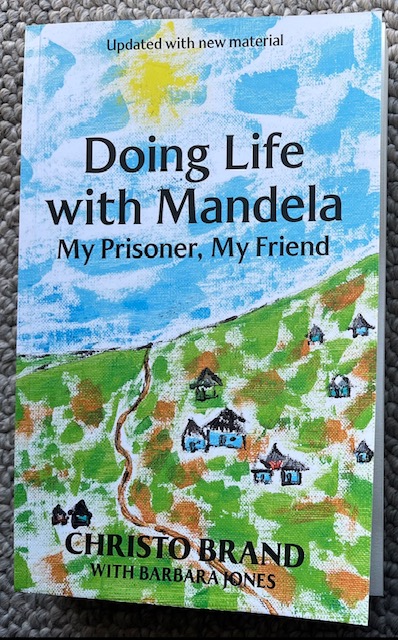
Brand’s story is chronicled in his book, Doing Life with Mandela: My Prisoner, My Friend, which provides a deeply personal account of their extraordinary relationship. In the book, he reflects on the lessons he learned from Mandela and how those lessons transformed his worldview. His narrative continues to resonate as a call for empathy and understanding in the face of societal divisions. During our time together he shared stories so touching he made all of us cry and made me more anxious to read the book he signed for us, which I did on our long flights home.
I highly recommend it.
Christo Brand’s profile is not just a story of a man who befriended a revolutionary leader; it is a story of transformation, the courage to see beyond prejudice, and the enduring power of human connection. His journey reminds us that even in the darkest corners of history, there is always a light that can guide us toward unity, respect, and hope.
“What counts in life is not the mere fact that we have lived. It is what difference we have made to the lives of others that will determine the significance of the life we lead.” – Nelson Mandela

Leave A Comment